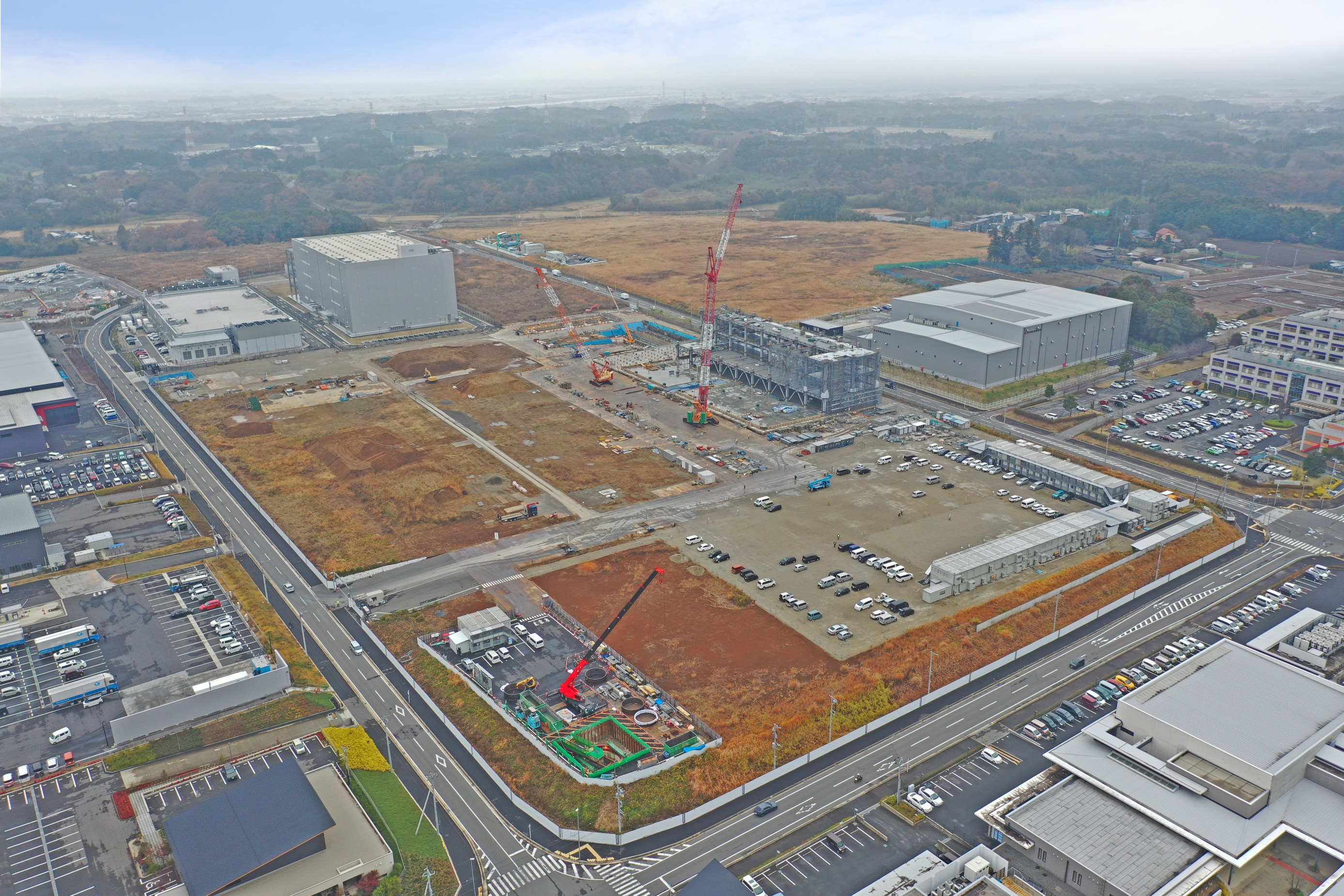
This is not an argument against hyperscalers. Large cloud and data-center infrastructure are important to Japan. The deeper question is ownership: who owns the land-intensive compute infrastructure, who controls it, and where the long-term economic value of the AI economy accumulates.
A hyperscale campus can bring major capital investment, construction activity, taxes and jobs. But attracting infrastructure is not the same as a community owning productive AI capital. YUMORI / eSingularity therefore proposes a complementary model: COGDC — Community-Owned Green Data Center, with the community-scale node described as an AI Koban.
A koban is not national headquarters. It is a small local node close to the community and connected to a much larger network. An AI Koban follows the same architecture: locally accountable compute, learning and data capability that connects outward to Japanese and global cloud infrastructure when larger capacity is needed.
AI Koban does not mean police authority or resident surveillance. It is a structural metaphor for small, distributed infrastructure close to the community.
Why test the option before demolition?
AI is physical infrastructure. It requires chips, buildings, transmission, cooling, electricity, land and capital. The former Sukatto Land Kuzuryu is an existing physical asset. The question is whether it can be repurposed before Fukui eliminates that option.
YUMORI is not asking Fukui City to approve COGDC on September 25, and it is not asking the city to fund an AI Koban. It is asking for the reuse alternative to be tested against demolition using the same evidence and standards.
Demolition can happen later. Once demolished, this option cannot be tested.
September 25: VOTE NO. Preserve the option, test the evidence, then decide. The supporting economic, policy, technical, legal and PPP/PFI record is collected in Campaign Document 03.
OFFICIAL / UPDATE印西市は2026年8月、データセンター等の建設をめぐる市独自ルールについて、複数の選択肢から都市計画法に基づく地区計画の変更を選択し、作業を進めていると公表しました。印西牧の原駅圏と千葉ニュータウン中央駅圏で説明会を予定し、印西牧の原東地区では8月4日に都市計画法に基づく決定がなされたと説明しています。
Is Japan trying to create the “next Inzai” across the country?
Bottom line: Japan is moving from attracting individual facilities toward planning large data-center clusters as national industrial infrastructure. METI has named nine prefectures as first-stage promising areas for its Data Center Concentration category, with criteria that contemplate gigawatt-scale expansion, roughly 30 hectares or more of industrial land, power, communications, water, resilience and community coexistence.
September 12 addendum — latest news and land-area comparison
On September 11, fantasista announced a basic agreement to begin financing and cooperation discussions with a U.S. investment manager's fund for the Sendai 200 MW total receiving-capacity project. This is not completed financing or development permission. Operator announcement.
These developments support discussing scale, location and community benefit in Fukui early; they do not establish a project near the onsen.
Published site areas: DPDC Inzai Park approximately 270,000 m² (27 ha), versus approximately 71,787 m² (7.18 ha) for Sendai. Inzai's area is about 3.76 times larger. Equivalent squares have sides of about 520 m and 268 m, calculated as the square root of each area. These are area comparisons, not actual plot shapes. Daiwa House source; Sendai source.
Site area differs from total floor area, and MW alone does not determine land requirements. The homepage outline follows the area selected for comparison. The supplied map has no scale bar; its outline is not yet calibrated to 27 ha, and cannot yet establish whether the marked area is larger or smaller than Inzai. A known map distance is needed before an equal-area overlay can be finalized.
Sendai — 200 MW proposal
OFFICIAL / OPERATOROn September 9, 2026, fantasista announced a plan to advance a 200 MW AI data center on approximately 71,787 square meters in Aoba Ward, Sendai. Phase I targets development permission in FY2028 with an indicated project budget of roughly ¥400 billion. This is an operator decision, not yet a government development approval.
Inzai — from concentration to zoning
OFFICIAL / UPDATEInzai City says it has chosen district-plan changes under the City Planning Act as the route for new local rules responding to data centers near stations and residential areas. Public explanation processes are underway for the Inzai-Makinohara and Chiba New Town Chuo station areas.
Chiba / Shiroi — hyperscale continues
OFFICIAL / OPERATORNTT DATA has announced a six-building, approximately 200 MW IT-load campus in Shiroi. Together with nearby TKY11, the company describes an approximately 250 MW cluster.
U.S. comparison
OFFICIAL / U.S.FERC ordered regional grid operators in June 2026 to justify or reform rules for connecting data centers and other large loads. New York announced a one-year statewide moratorium on new hyperscale data centers in July 2026 while it develops stronger rules for infrastructure costs, environmental impacts and community benefits.
ANALYSISThe U.S. pattern is often concentration first, followed by disputes over grid costs, land, water, noise, tax incentives and community benefits. Japan can design those rules earlier.
Fukui signal
OFFICIALFukui is not currently among the nine Data Center Concentration promising prefectures. Fukui City and Obama City are included in the separate Decarbonized Power Utilization category.
ANALYSISThis does not mean a hyperscale campus is confirmed for Fukui. It means Fukui is already inside a national policy environment connecting clean power, industrial location and digital infrastructure. The YUMORI position is not anti-data-center: large greenfield campuses consuming tens of hectares should not become the only model.
Community-scale alternative
Campaign update, September 13: YUMORI.me is the preparatory committee carrying the civic and preservation work of eSingularity.ai. The current request is VOTE NO on the budget containing demolition preparation for Sukatto Land Kuzuryu at the September 25 vote. A fixed review period and postponement are no longer requested. A NO vote does not approve the reuse proposal or commit public investment, guarantees, or project funding.
Before major land conversion, Fukui can test whether existing public buildings, factories, hotels, warehouses and hot-spring facilities can support modular 1→5→10→20 MW compute where structure, power, fiber, cooling and heat reuse make sense. Distributed compute will not replace every hyperscale facility. The point is to create a third option before communities face a binary accept-or-reject decision.